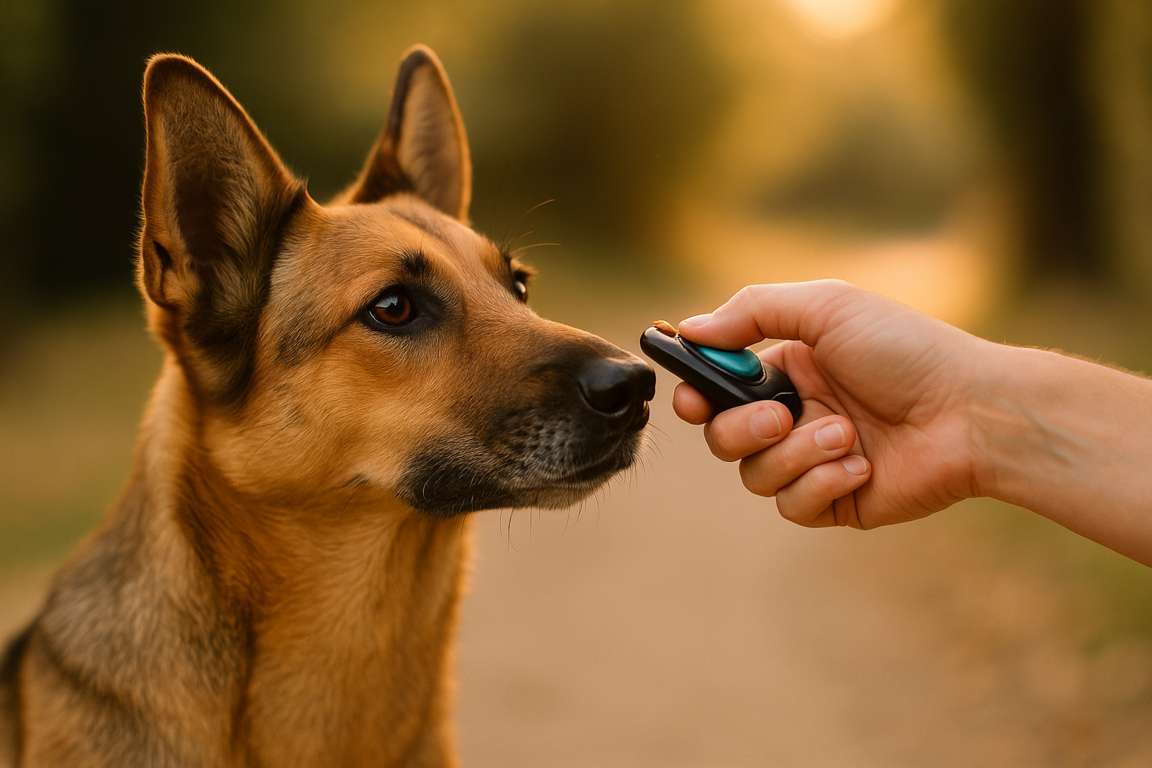


Fearful dog: how to gain their trust with respect
Fearful dog? Does your dog hide, shake or run away? Not "bad". Learn to build a safe bond and gain his trust without punishment or rushing. WOW guide.
Publication date:
10/08/2026
From hiding to calm: respectful strategies for fearful dogs
He arrived weeks ago. Or months. And he still hides. When you walk into the room, he cowers. When you approach, he shakes. He doesn't come for cuddles. He doesn't want to play. Sometimes he won't even eat if you're watching.
And you wonder: "what am I doing wrong?"
Nothing. You're doing nothing wrong.
You've tried talking softly. Giving treats. Sitting next to him without looking. Someone told you to hold him firmly so he "realises it's OK". Someone else said to ignore him completely.
But he's still there. Hiding. Looking distrustful. And you're starting to feel like he'll never change.
What if we told you your dog isn't "ungrateful" or "weird"? What if we told you he learned not to trust, but he can learn to trust again?
Gaining a fearful dog's trust isn't complicated. But it requires something you can't buy: time and respect. At WOW we don't believe in shortcuts. We believe in the bond. And the bond is built through calm, patience and small daily victories. Stick with us, because what follows could change your dog's life… and yours.
Why is my dog so frightened?
He wasn't born this way. Something taught him the world isn't safe.
Experts in canine behaviour point to several causes of fear in dogs:
- Previous negative experiences. A dog who has been punished, abandoned or mistreated learns that humans hurt. It's not "grudge". It's survival.
- Lack of early socialisation. Puppies have a socialisation window between 4 and 14 weeks. If during that period they don't meet people, other dogs, noises or new environments, they may react with fear to anything new as adults.
- Genetics. Some breeds or bloodlines are naturally more sensitive. No one's fault. Just biology.
- Sudden changes. A move, a new baby, losing a companion. Dogs get unsettled too.
We don't judge the origin here. We only work with the present. And the present is that your dog needs you to help him discover that the world isn't as scary as he thinks.
But there's a mistake most people make without realising it…
Common mistake – Why "overprotecting" a fearful dog doesn't help
Myth: "If I hug him and say 'it's OK, don't worry', I'm helping him".
Reality: Excessive comforting can reinforce fear.
When your dog shakes and you hug him, speak in an urgent tone or give him treats "to calm him down", your dog understands one thing: "being scared is good, this gets me attention".
That sounds harsh, but it makes sense. For a dog, your emotional reaction is information. If you get nervous when he's scared, he thinks: "my human is upset too, the danger must be real".
Does that mean you shouldn't comfort him? No. It means the way you comfort matters.
The WOW alternative: It's not about ignoring the fear. It's about not feeding it with your own anxiety. Instead of hugs and urgent words, act calm. Breathe. Your dog will read your calm and slowly learn that if you're not scared, maybe he shouldn't be either.
What DOESN'T work: punishment and corrections
Let's be very clear.
Punishing a dog for being scared is like punishing a child for crying. It makes no sense and it hurts.
What you should never do:
- Shout at him or hit him when he hides.
- Yank the lead if he freezes.
- Force him to approach what scares him.
- Lock him away "so he gets used to it".
- Use punishment collars.
Why? Because punishment doesn't remove fear. It multiplies it. Your dog won't stop being scared of what scares him. He'll learn to be scared of you too.
At WOW we believe the bond is built from safety. And safety isn't imposed. It's earned.
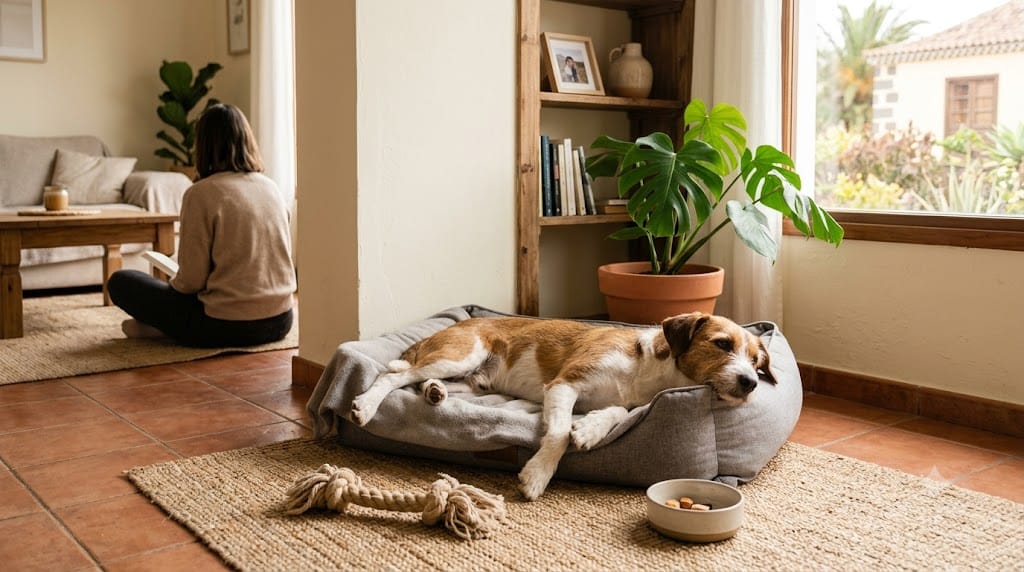
First step: create a safe space for your dog
A dog without a place to retreat to is a dog living on constant alert.
In nature, dogs would look for a den. In your home, they need their own corner.
How to create a safe space:
- A bed or blanket in a quiet corner. Not in the middle of the room.
- No one bothers him there. No petting. No children. No visitors.
- He associates that spot with good things: treats, toys, peace.
This space isn't a punishment. It's his room. His refuge. The place he can go when the world overwhelms him.
And most importantly: respect his space. When your dog goes to his bed, leave him alone. Don't follow him. Don't call him. He's saying "I need to be alone". And that's fine.
A dog who knows he has a safe space is a dog who starts to relax.
The golden rule: solve the emotion first, then the behaviour
Many owners want their dog to "stop hiding" or "greet visitors". But they're skipping a step.
First comes the emotion. Then comes the behaviour.
If your dog is scared, anything you ask of him (sit, come, stay still) is secondary. Because a frightened dog can't learn. He can only survive.
The right order:
- Listen to his emotion. Is he scared? Insecure? Stressed?
- Remove the pressure. Give him space. Reduce the stimuli.
- Build safety. With calm, with routines, with predictability.
- Then teach. When he's calm, you can ask for behaviours.
It's not about "obedience". It's about wellbeing.
How to strengthen the bond through play
Here's a secret few people know: play is one of the best tools for gaining a fearful dog's trust.
Play isn't just fun. It's communication. It's cooperation. It's building a positive shared history.
Recommended games for insecure dogs:
- Tug of war (always with a rope toy, never with your hand). He wins. Always. He needs to feel strong and safe.
- Hide treats around the house. He "hunts" his food. Sniffing calms him and builds confidence.
- Throw a soft toy a short distance. No pressure. If he doesn't fetch it, no problem.
- Play "come here" with treats. Not as a command, as a game. Run away and let him chase you.
The keys to therapeutic play:
- No pressure. If he doesn't want to play, it ends.
- He decides when it starts and when it ends.
- Always positive reinforcement.
A dog who plays with you is a dog who's starting to trust.
Real WOW case: Ayka, a mixed breed who arrived shaking
At WOW Dogtrainer we've helped many families with fearful dogs. One case that sticks in my mind is Ayka.
Ayka came from a rescue centre. No one knew her history, but her body told it: she cowered when someone raised a hand, wouldn't leave her bed, shook when she heard the door.
Her owners, a couple in Valle San Lorenzo, were desperate. After three months, they still couldn't pet her. They felt rejected.
What we worked on was very simple, but it took time:
- A safe space for Ayka. Her bed in a corner. No one crossed into it.
- Zero attempts to pet her. They let her come on her own.
- Scent games: hiding treats around the living room while they sat on the sofa without looking at her.
- The couple learned not to "comfort" the fear with hugs. Just calm presence.
The first week, Ayka didn't leave her bed. The second, she started sniffing the treats. The third, she took a treat from a hand.
Today, Ayka sleeps on the sofa with her family. She's still wary of strangers, but with her owners she's a different dog. She came from fear. She stayed in trust.
Cases like Ayka's remind us that there are no "impossible" dogs. Just dogs who need more time and a respectful approach.
Small steps that build big changes
You don't need grand gestures. You need consistency.
Routines that help a fearful dog:
- Fixed schedules. Eating, walking, sleeping at the same times. Predictability is safety.
- Ignore him when you come home. Don't hug him the second you walk in. Let him come to you.
- Speak in a low, soft tone. No loud voices. No strong emotions.
- Don't stare directly into his eyes. For an insecure dog, a fixed stare can feel like a threat. Look sideways or blink slowly.
- Reward any sign of bravery. He took one step out of his bed? Reward. He came close to sniff you? Reward. He looked at the door without shaking? Reward.
Changes don't happen overnight. But one day you look back and realise your dog isn't shaking anymore. And then you understand that every minute you invested was worth it.
Quick checklist – What to do and what not to do with a fearful dog
Do: Leave him in his space. Respect his need.
Don't: Drag him out or lock him away.
Do: Calm presence. Breathe deeply.
Don't: Hug him and say "poor thing" in an anxious tone.
Do: Sit on the floor without looking at him. Drop treats nearby.
Don't: Chase him to catch him.
Do: Leave the food and move away. Let him eat without feeling watched.
Don't: Force him to eat from your hand.
Do: Wait. Loosen the lead. Breathe.
Don't: Yank the lead or drag him.
Do: Reward calmly. A soft word or a small treat.
Don't: Ignore the progress or ask for more straight away.
FAQ – Frequently asked questions about fearful dogs
How long does it take to gain a fearful dog's trust?
It depends on the dog, his history and your consistency. Some dogs improve in weeks. Others need months or even a year. There are no shortcuts. The key is not to expect "quick results". Every small step forward is a victory.
Should I let my fearful dog hide all the time?
Yes, at first. He needs a place where he feels safe. But over time, you can gently encourage him to come out. Without forcing. For example, put treats closer and closer to the edge of his bed. Let him decide to come out.
My dog shakes when I touch him. Should I stop petting him?
Yes, for now. If he shakes, he's not enjoying it. Respect his distance. Build trust first with treats, games and calm presence. When he starts to seek you out, you can pet him. But let him make the first move.
Does play really help with fear?
Very much. Play releases endorphins, reduces stress and builds a positive association with you. Start with low-intensity games: hiding treats, throwing a soft toy with no pressure. Let him decide whether to join in.
Do I need a professional?
If your dog has bitten out of fear, if his quality of life is very poor (won't eat, won't go outside), or if you've seen no progress for months, get help. A positive trainer can spot things you might miss. That's not failure. It's responsibility.
At WOW Dogtrainer we work every day with families who felt their dog would never change. The good news is that with patience and respect, most learn to trust again.
If your dog lives in fear and you don't know how to help him, we understand.
At WOW Dogtrainer we can help you build a safe bond based on respect. A no-obligation first chat to see what your dog needs and how you can help him.
Message us on WhatsApp or explore all our services, especially our behaviour problem service.
We're based in Tenerife (Adeje, San Miguel de Abona, all over the island).
Also online for the whole of Spain.


Who might enjoy this article?
WOW Dogtrainer Fenya - Positive dog training
How can we help you?
Follow us on our official channels
Search by Category
Learn how to understand your dog and address issues like barking, reactivity, or anxiety using respectful methods. Practical guides in Tenerife.
Did you adopt a dog? Essential tips for the first days, stress-free adjustment, and building a secure bond. A guide for new families in Tenerife.

Nutrition, environmental enrichment, mindful walks, and daycare in Fañabé. The premium lifestyle your dog deserves in Tenerife.
Has a puppy arrived home? Early training, socialisation, first steps, and problem prevention. Start off right with positive reinforcement.